UHF vs HF vs NFC: What’s the Difference Between RFID Frequencies?
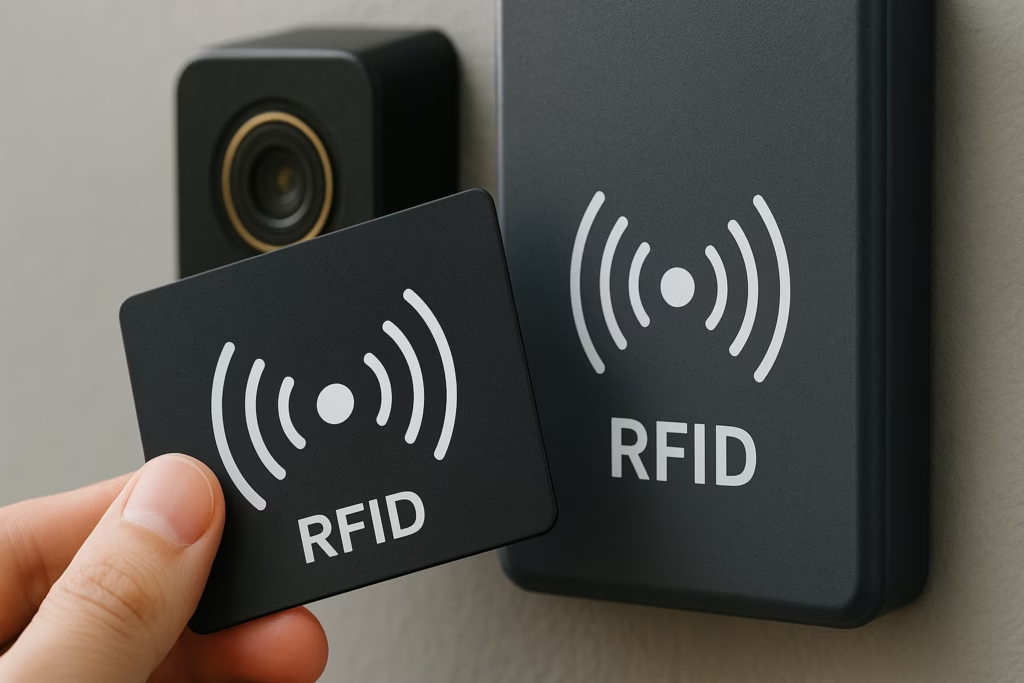
An RFID tag and an RFID reader have to speak the same radio language. A UHF tag will not wake up on an HF reader, and an HF card won’t be seen by a UHF antenna, however close you hold it. Buy the wrong frequency and the hardware isn’t just inefficient, it’s incompatible.
The confusion usually starts with NFC. People ask whether NFC is a different technology from RFID, or whether it’s the same as HF. The short answer is that NFC is a specific, tightly defined slice of HF, and that difference changes which tags, readers, and phones you can use.
This guide explains how UHF, HF, and NFC differ, where each one belongs, and how to choose between them.
Not sure which frequency fits your project? Tell us what you’re tracking or securing and how far you need to read, and we’ll recommend one.
The Short Answer
- UHF (860–960 MHz) reads from metres away and captures many tags quickly. It’s the standard for warehouses, supply chains, retail inventory, and asset tracking.
- HF (13.56 MHz) reads at short to moderate range, from a tap up to roughly a metre. It’s used for access cards, library and laundry tracking, and item-level tagging.
- NFC is a subset of HF that also runs at 13.56 MHz but adds two-way communication and a deliberately very short range, around 4 cm. It’s what smartphones, payment cards, and tap-to-pair features use.
So NFC isn’t a rival to HF. It’s HF with a standard and a use case built on top.
UHF vs HF vs NFC: Side-by-Side Comparison
| Factor | HF RFID | NFC | UHF RFID |
|---|---|---|---|
| Frequency | 13.56 MHz | 13.56 MHz (HF subset) | 860–960 MHz (varies by region) |
| Typical read range | Up to about 1 m; often around 30 cm in practice | About 4 cm or less | Several metres; 10 m or more in good conditions |
| How it communicates | Near-field, magnetic (inductive) coupling | Near-field, two-way communication | Far-field, radiated radio waves |
| Reading many tags at once | Possible, moderate | Designed for one tap at a time | Fast, reads many tags in bulk |
| Near metal and liquid | More tolerant | More tolerant (still affected by metal) | More sensitive; needs suitable tags |
| Key standards | ISO/IEC 14443, ISO/IEC 15693 | NFC Forum, ISO/IEC 14443, ISO/IEC 18092 | EPC Gen 2 (ISO 18000-6) |
| Works with smartphones | Some HF tags, via NFC | Yes, built into many phones | No, phones generally don’t read UHF |
| Typical uses | Access cards, library and laundry tracking, light asset tags | Payments, tap-to-pair, mobile access, smart posters | Warehouse, logistics, retail inventory, asset tracking |
Ranges are approximate. The band sets the ceiling, but tag size, reader power, antenna, and the environment decide what you actually get on site. A low-frequency (LF) band at 125–134 kHz also exists, with very short range, and is common in some access and animal-identification systems.
HF RFID: The Middle Ground
High-frequency RFID operates at 13.56 MHz and splits into two main standards depending on how much range you need.
- ISO/IEC 14443 is the tap-range standard behind most access badges and contactless payment cards, built for reads of a few centimetres.
- ISO/IEC 15693 is the vicinity standard, reaching further, up to about a metre with a good antenna, and used in library book tracking and light asset tags.
HF works through magnetic coupling, which is why it’s relatively tolerant of liquids and why its range is limited. It’s a good fit when you want a controlled, close-range read, and for items such as laundry, library stock, and cards.
NFC: HF With Rules and Two-Way Talk
Near-field communication is a subset of RFID that runs at 13.56 MHz. NFC standardized on that single frequency so phones, tags, and readers from different manufacturers work together reliably.
What makes NFC different from plain HF RFID:
- Two-way communication. Earlier contactless cards were one-way. NFC lets two devices exchange data, so a phone can read a tag, or behave like a card.
- Deliberately short range. Typically about 4 cm or less. The short distance is a security feature, because a read needs a deliberate tap.
- Standardization. The NFC Forum, founded in 2004 by Nokia, Philips, and Sony, defines how devices communicate and certifies compliance.
- Phone support. Many smartphones include NFC, which opens up mobile payments, digital keys, and tap-to-open links.
Short range helps security, but it isn’t the whole answer. Well-designed NFC systems still rely on encryption and sensible transaction limits.
Planning cards, badges, or tap-based access? We can help you choose the right card type and readers.
UHF RFID: Range and Speed
Ultra-high-frequency RFID works in a different way. Instead of magnetic coupling at close range, a UHF reader radiates radio waves that travel through free space, powering and reading passive tags many metres away. That gives UHF its long range and its ability to read many tags per second.
The trade-offs follow from the physics:
- UHF is more sensitive to metal, liquids, and reflections in the environment, so tags and antennas need careful selection and placement
- Memory and security features depend on the chip. UHF tags are most often used to carry an ID that points to a record in software
- Frequency allocations differ by region. For example, the US uses 902–928 MHz and Europe 865–868 MHz, so confirm the allocation that applies where you’ll operate
The widely adopted standard is EPC Gen 2 (ISO 18000-6), which helps tags and readers from different vendors work together. Smartphones generally don’t read UHF tags, so UHF projects use dedicated fixed or handheld readers.
Which Frequency Fits Which Job?
| If You Need To… | Usually Choose | Why |
|---|---|---|
| Count pallets and cartons at a dock door | UHF | Long range and bulk reads without stopping each item |
| Track retail stock or run fast stocktakes | UHF | Reads many items quickly from a distance |
| Locate equipment across a building | UHF (active for live location) | Range, with active tags where continuous tracking is worth the cost |
| Give staff door-access cards | HF / NFC (or LF) | Controlled tap-range reads suit identity and security |
| Accept contactless payments or mobile keys | NFC | Standardized, phone-compatible, and tap-based |
| Track library books, laundry, or item-level goods | HF | Moderate range and good tolerance near liquids and fabrics |
| Let customers or staff read a tag with a phone | NFC | Phones read NFC, but generally not UHF |
| Tag items on metal or containing liquid | HF, or on-metal UHF tags | HF tolerates these better; UHF needs tags designed for the surface |
What This Looks Like in Real Hardware
Frequency choices show up in everyday products, and a few Pointus-listed examples make it concrete.
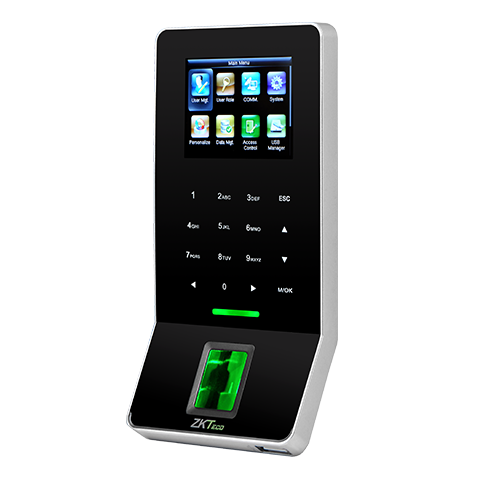
- Door access and attendance. The ZKTeco F22 terminal supports card capacity of 5,000 with optional ID or Mifare cards, and ZKTeco’s BioTime 9.5 platform supports RFID card verification alongside fingerprint and face. Card-based access sits in the LF and HF world.
- Queue and check-in kiosks. The Pointus Queue Ticket Dispense Machine offers optional RFID card readers alongside barcode, QR, and ID card options.
- Mobile computers. The Zebra TC201 handheld offers optional RFID alongside its barcode scanner.
- Printing tags and labels. The Zebra ZD621R is available in an RFID configuration, so labels can be printed and encoded together.
Always confirm the frequency and standard of any RFID option before you buy. The word “RFID” on a spec sheet doesn’t tell you which band it uses.
Can One Tag Work on More Than One Frequency?
Yes, in some cases. Dual-frequency tags exist that combine an HF/NFC mode with a UHF mode, so one tag can be tapped with a phone and also read by a long-range UHF reader. They’re a useful option when the same item needs both a customer-facing tap and warehouse tracking, though they cost more and suit specific use cases, so test before committing.
How to Choose: A Practical Process
Step 1: Decide the Read Distance
A tap at a door, a read at a dock, and a scan across a room call for different bands. Distance usually settles the choice on its own.
Step 2: Decide How Many Items per Read
One card at a time points to HF or NFC. Hundreds of items at once points to UHF.
Step 3: Check What’s Being Tagged
Metal, liquid, fabric, and packaging all affect the choice. Pilot tags on real items.
Step 4: Check Who or What Will Read It
If people need to read tags with their own phones, you need NFC. If dedicated readers do the work, UHF is available.
Step 5: Check Compatibility and Regulations
Match tags to readers by frequency and standard, and confirm UHF allocations for your region.
Step 6: Pilot Before Scaling
Real-world read rates beat spec sheets. Test shortlisted options in your environment first.
Common Mistakes
Assuming “RFID” Means One Thing
Tags and readers must match in frequency and protocol. A mismatch means no read at all.
Expecting NFC Cards to Read From a Distance
NFC is designed for a tap. If you need reads from metres away, you need UHF.
Expecting a Phone to Read UHF Tags
Phones generally read NFC, not UHF. Plan for dedicated UHF readers.
Using Standard UHF Tags on Metal or Liquids
Choose tags built for the surface, or consider HF where short range is acceptable.
Skipping the Regional Check for UHF
Allowed UHF bands and power levels differ between regions. Confirm before ordering.
Choosing an RFID Partner in Kuwait
The right frequency comes from matching your use case to the physics, then confirming that tags, readers, printers, and software all agree. Pointus Auto ID Solutions provides Automatic Identification and Data Capture (AIDC) technologies, including barcode systems, RFID tracking, and smart labeling, and is an authorized partner for brands including Zebra, HID Global, and Impinj.
Pointus brings more than 10 years of experience across 9 industries and is based at Zainah Tower, Office B-15, Tunisia Street (Opp. Xcite), Hawally, Kuwait.
Ready to choose the right RFID frequency? Reach out with your use case and we’ll recommend tags, readers, and printers to test.
A Simple Checklist Before You Buy
Before choosing an RFID frequency, confirm these points:
- How far must the tag be read from: a tap, a doorway, or across a room?
- How many tags need to be read at once?
- What are the tags attached to: metal, liquid, fabric, cardboard?
- Do people need to read tags with their own phones?
- Which standard do your readers and software support?
- Does the UHF allocation you need apply in your region?
- Do tags need security features such as encryption?
- Have you piloted the shortlist on real items?
Answering these first prevents the two common failures: tags that can’t be read at the distance you need, and hardware that can’t talk to each other.
Conclusion
UHF, HF, and NFC aren’t three flavours of the same thing. They differ in frequency, how they couple to the tag, how far they read, and what they’re good at. UHF gives range and bulk reading for logistics and inventory. HF gives controlled, moderate-range reads for cards and item-level tagging. NFC is HF with two-way communication and a very short range, built for phones, payments, and secure taps.
Start from the job, not the acronym: how far, how many, what surface, and who or what is reading. The right band usually becomes clear quickly.
For businesses in Kuwait weighing the options, Pointus Auto ID Solutions supplies AIDC and RFID hardware and software, with partnerships including Zebra, HID Global, and Impinj, and can help you test the right frequency before you commit.
Ready to Pick the Right Frequency?
Talk to Pointus Auto ID Solutions about UHF, HF, and NFC RFID for your project.
RFID Frequencies, Answered
UHF (860–960 MHz) reads from metres away and handles many tags at once. HF (13.56 MHz) reads at short to moderate range. NFC is a subset of HF at 13.56 MHz with two-way communication and a very short range of about 4 cm.
NFC is a subset of RFID. It uses the same 13.56 MHz frequency as HF RFID but adds two-way communication and a strict short range.
UHF has the longest range among the common passive bands, typically several metres and up to 10 m or more in good conditions. Active tags can reach further still.
Generally no. Phones read NFC, and some HF tags at 13.56 MHz, but they don’t typically include UHF readers, so UHF projects use dedicated fixed or handheld readers.
Both are HF standards at 13.56 MHz. ISO 14443 is built for tap-range reads and is behind most access badges and payment cards. ISO 15693 is the vicinity standard and reaches further, up to about a metre with a good antenna.
HF and LF generally tolerate metal and liquids better. UHF is more sensitive, so it needs tags designed for the surface, such as on-metal tags, and careful testing.
Passive UHF is the usual choice, because its long range and bulk reading suit dock doors, pallets, and stocktakes.
HF or NFC cards are common, since a controlled tap-range read suits identity and security. Some systems also use LF cards. Match the card type to your reader.
Yes. UHF allocations differ by region, for example 902–928 MHz in the US and 865–868 MHz in Europe, so confirm the allocation that applies where you’ll operate before buying.
Pointus Auto ID Solutions provides AIDC technologies including barcode systems, RFID tracking, and smart labeling, and is an authorized partner for brands including Zebra, HID Global, and Impinj in Kuwait.