
RFID in Healthcare: How Hospitals Use RFID for Asset & Patient Tracking
A hospital can own enough infusion pumps and still have nurses spending the start of a shift searching for one. It can have a perfectly good patient record and still attach it to the wrong wristband. Neither problem is about buying more equipment or hiring more staff. Both come down to not knowing, reliably and instantly, where something or someone is.
That’s the gap RFID fills in healthcare. It started as a way to track equipment, and it now also supports identifying patients, tracking specimens, checking surgical items, and controlling access.
This guide explains how hospitals actually use RFID for asset and patient tracking, what a deployment involves, and the issues that need careful handling in a clinical setting.
Planning RFID for a hospital or clinic? Tell us what you want to track and we’ll help you scope a sensible first project.
How Do Hospitals Use RFID?
Hospitals attach RFID tags to equipment, patient wristbands, specimens, surgical items, and staff badges. Readers at doorways, in corridors, and in clinicians’ hands pick up those tags and send the data to hospital software, which shows where things are, who they belong to, and whether the right match was made.
The main uses fall into a few groups:
- Asset tracking: finding and managing pumps, ventilators, wheelchairs, and other mobile equipment
- Patient identification and tracking: confirming the right patient at each step of care and following patient flow
- Surgical items: counting sponges and tracking instrument sets
- Specimens and medication: matching samples and doses to the right patient
- Staff and access: controlling doors and logging in at workstations
Why Hospitals Choose RFID Over Barcodes Alone
Barcodes remain useful in hospitals, but they have to be seen. A staff member must line up a scanner with the code, one item at a time. RFID works differently:
- It needs no line of sight, so a tag can be read through packaging or from a pocket
- One reader can capture several tags at once
- Fixed readers can log movement automatically, with no one stopping to scan
- Tags can support location tracking, not just identification
In practice, many hospitals use both: barcodes where a deliberate scan is fine, and RFID where speed, automation, or location matter.
Asset Tracking: Finding Equipment Faster
Hospitals depend on mobile equipment that moves between wards, theatres, and storage. When it can’t be found, staff lose time, units get hired or bought unnecessarily, and care can be delayed.
RFID lets teams see the location, availability, and often the usage or maintenance status of tagged equipment in near real time. Typical items include:
- Infusion pumps, ventilators, defibrillators, and monitors
- Wheelchairs, stretchers, and beds
- Surgical instrument sets and trays
- Consumables and PPE stock
Hospitals often use active tags for high-value, frequently moved assets where live location justifies the higher cost per tag, and passive tags for items where checkpoint reads at doors and storage rooms are enough.
Patient Identification and Tracking
Patient misidentification is among the most serious risks in a hospital, and an RFID wristband gives staff a fast, consistent way to confirm who they’re treating.
Typical checkpoints for wristband verification include:
- Medication administration
- Specimen collection
- Surgical preparation
- Diagnostic procedures
Beyond identification, some hospitals track patient movement through wards and departments to improve patient flow, so staff can see where a patient is in their care journey and where delays are building up.
Because this involves people, it needs careful design. Many deployments store only an identifier on the tag and keep clinical detail in secured hospital systems, and they follow the health-privacy and data-protection rules that apply to the facility. Patient tracking should be introduced with clear policies, not just clever technology.
Surgical Items, Specimens, and Medication
Surgical Sponge Detection
In some operating-room systems, each surgical sponge carries an RFID tag. Before closing, a reader is passed over the surgical field to check whether any tagged sponge remains inside the patient. It’s a safety check aimed at one very serious, very avoidable error.
Instrument and Tray Tracking
Tagged instrument sets can be tracked through use and sterilization, supporting usage monitoring, sterilization status, and reduced loss.
Specimen and Lab Sample Tracking
Linking a specimen’s tag to the right patient at the bedside helps prevent mislabelled samples and gives the lab a clear chain of custody.
Medication Verification
Before giving a dose, a nurse can scan the patient’s wristband and the medication so the system confirms the match.
Staff Badges and Access Control
RFID badges let hospitals control entry to restricted areas such as pharmacies, theatres, and server rooms, and log who went where. The same badge can support workstation login, so clinicians don’t retype passwords at every terminal.
This overlaps with access control, which Pointus also delivers through ZKTeco-based systems with role-based door access and a full audit trail of every entry.
Not sure which use case to start with? We can help you rank them by impact and effort for your facility.
How a Hospital RFID System Works, Step by Step
Items and People Are Tagged
Equipment gets a tag suited to its surface and handling. Patients receive wristbands, and staff carry badges. Tags are printed and encoded so each one carries a unique ID.
Readers Capture the Tags
Fixed readers at doorways, corridors, and storage rooms log movement automatically. Handheld or mobile readers are used at the bedside and for counts.
Read Data Goes to Software
Each read, with its location and time, is sent over the hospital network to application software that stores and analyses it.
Software Links Reads to Records
The system matches the tag to an asset record, a patient record, or a staff profile, ideally through integration with the hospital’s existing systems.
Staff See Results and Alerts
Dashboards show where assets are, and alerts can flag a mismatch, such as the wrong patient for a medication or equipment leaving a ward.
Hospital RFID Use Cases at a Glance
| Use Case | What’s Tagged | Typical Reader Setup | Main Benefit |
|---|---|---|---|
| Asset tracking | Pumps, ventilators, wheelchairs, beds | Fixed readers at doors and storage, handhelds for searches | Faster equipment location, better utilisation |
| Patient identification | Patient wristbands | Bedside handheld or mobile computer | Right-patient verification at each step |
| Patient flow | Wristbands | Fixed readers in corridors and departments | Visibility into delays and bottlenecks |
| Surgical sponges | Tagged sponges | Reader passed over the surgical field | Check against retained items before closing |
| Instrument sets | Trays and instruments | Readers at sterilization and theatre points | Usage and sterilization tracking, less loss |
| Specimens | Sample labels or containers | Bedside and lab readers | Fewer mislabelled samples, chain of custody |
| Staff access | Badges and cards | Door readers, workstation readers | Controlled entry and audit trail |
Challenges Specific to Healthcare
Hospitals are harder RFID environments than warehouses. These are the points to plan for.
Interference Near Medical Devices
RFID readers emit radio energy, and hospitals must consider its effect on sensitive equipment such as implanted devices like pacemakers. Hospitals manage this through antenna placement, frequency choice, and testing during deployment, and clinical engineering should be involved from the start, not brought in at the end.
Liquids, Metal, and the Human Body
Metal equipment, fluids, and bodies all disrupt radio signals. Tags need to be designed for the surface and the environment, and surgical settings, where devices are surrounded by biological fluids, are especially demanding.
Privacy and Data Protection
Tracking patients and staff requires clear policies on what’s collected, who sees it, and how long it’s kept, aligned with the health-privacy and data-protection rules that apply to your facility.
Tag Volume and Cleaning
Hospitals generate large numbers of disposable tags every day, such as wristbands and specimen labels, so printing, encoding, and supply need to run smoothly. Tags on reusable equipment must also survive regular cleaning and disinfection.
Integration With Existing Systems
RFID delivers the most value when read data connects to the systems clinicians already use, such as patient and asset records, rather than sitting in a separate dashboard.
The Hardware Behind a Healthcare RFID Project
A hospital deployment usually combines three kinds of hardware with the software behind them.
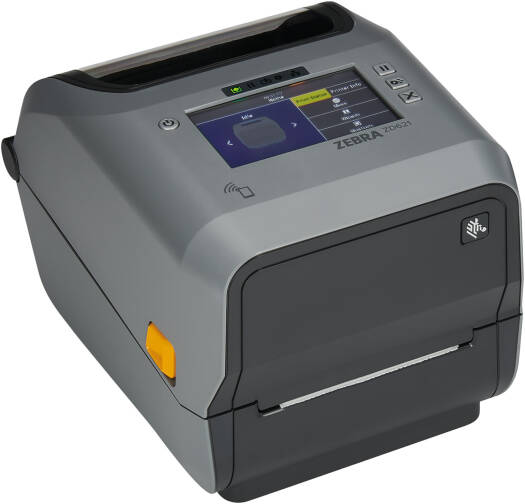
- Printers that print and encode tags and wristbands. Zebra offers the ZD621R in Healthcare and RFID configurations, alongside direct thermal and thermal transfer versions, and Pointus lists the model among its Zebra printers.
- Mobile computers for the bedside. The Zebra TC201, which Pointus lists, is a rugged handheld with a 6-inch Full HD+ display and optional RFID alongside its barcode scanner.
- Fixed and handheld readers and tags matched to each use case, from partners including Impinj and HID Global, supplied through Pointus’s AIDC and RFID range.
Confirm that any device used near patients meets your facility’s infection-control and clinical-engineering requirements before you buy.
How to Start: A Practical Approach
Step 1: Pick One Problem
Start where the pain is clearest. If equipment goes missing, begin with asset tracking. If accreditation or incident reviews flag identification gaps, begin with patient identification.
Step 2: Involve Clinical and IT Teams Early
Clinical engineering, infection control, IT, and the clinicians who’ll use the system should shape the design from day one.
Step 3: Survey the Environment
Map where readers will go, check for interference sources, and test tags on real equipment and real surfaces.
Step 4: Pilot in One Area
Try it on a single ward or equipment category first. Measure read reliability, staff acceptance, and workflow impact before scaling.
Step 5: Integrate and Expand
Connect the data to your hospital systems, then add use cases one at a time rather than all at once.
Common Mistakes in Hospital RFID Projects
Trying to Do Everything at Once
A hospital-wide rollout with several use cases overwhelms staff and hides which part is working. One focused pilot teaches more.
Leaving Clinical Engineering Out
Interference and device-safety questions belong in the design stage, not after installation.
Using Standard Tags on Metal or Fluid-Rich Items
Tags that ignore the surface or environment fail in the field. Test them on real items first.
Treating Privacy as an Afterthought
Patient and staff tracking need written policies and clear limits before the system goes live.
Skipping Workflow Design
If scanning a wristband adds steps instead of removing them, staff will find ways around it. Design around how clinicians actually work.
Choosing an RFID Partner for Healthcare in Kuwait
Healthcare RFID works best when tags, readers, printers, mobile devices, and software are chosen together for a specific clinical need.
Pointus Auto ID Solutions provides Automatic Identification and Data Capture (AIDC) technologies, including barcode systems, RFID tracking, and smart labeling. Healthcare is one of the 9 industries it serves, and it is an authorized partner for Zebra, HID Global, and Impinj, with more than 10 years of experience.
For hospitals thinking about patient flow as well, Pointus also deploys queue management with priority routing that can route patients by urgency or booking.
Pointus is based at Zainah Tower, Office B-15, Tunisia Street (Opp. Xcite), Hawally, Kuwait.
Ready to scope a healthcare RFID pilot? Reach out with your priorities and we’ll recommend tags, readers, and printers to test.
A Simple Checklist Before You Start
Before launching RFID in a hospital or clinic, confirm these points:
- Which single problem will the first project solve?
- Are clinical engineering, infection control, and IT involved from the start?
- Have you checked interference risks near sensitive medical devices?
- Do tags suit the surfaces, fluids, and cleaning routines they’ll face?
- What privacy and data-protection policies will govern patient and staff tracking?
- How will tags and wristbands be printed and encoded at the volume you need?
- How will read data connect to your existing hospital systems?
- Have you planned a pilot with clear success measures?
Answering these first keeps the project safe, focused, and worth scaling.
Conclusion
Hospitals use RFID to answer two simple questions quickly and reliably: where is it, and is this the right one? That covers equipment, patients, specimens, surgical items, and staff access, with readers at doorways and bedsides feeding software that turns reads into records and alerts.
The technology is proven, but healthcare adds constraints that other settings don’t: interference near medical devices, difficult materials, patient privacy, and heavy tag volumes. Projects that start small, involve clinical and IT teams early, and pilot before scaling avoid most of the problems.
For hospitals and clinics in Kuwait, Pointus Auto ID Solutions supplies AIDC and RFID hardware and software, backed by partnerships with Zebra, HID Global, and Impinj, to help you test and scale the right first use case.
Ready to Bring RFID to Your Hospital?
Talk to Pointus Auto ID Solutions about RFID asset and patient tracking for your facility.
RFID in Healthcare, Answered
They tag equipment, patient wristbands, specimens, surgical items, and staff badges, then use readers at doorways, corridors, and bedsides to feed hospital software that shows locations and confirms identity.
Infusion pumps, ventilators, defibrillators, monitors, wheelchairs, stretchers, beds, surgical instrument sets and trays, and consumables such as PPE can all be tracked.
RFID wristbands let staff verify patient identity at medication administration, specimen collection, surgical preparation, and diagnostic procedures, reducing reliance on visual or verbal checks.
In some systems, each sponge carries an RFID tag and a reader is passed over the surgical field before closing to check whether any tagged sponge remains. RFID can also help track instrument sets through use and sterilization.
RFID readers emit radio energy, so hospitals consider electromagnetic interference, especially near implanted devices such as pacemakers. It’s managed through antenna placement, frequency selection, and testing, with clinical engineering involved from the start.
It can be, when handled responsibly. Facilities should set clear policies on what is collected and who sees it, and follow the health-privacy and data-protection rules that apply to them. Many deployments store only an identifier on the tag.
Both. Active tags often suit high-value, frequently moved assets where live location justifies the cost, while passive tags suit wristbands, labels, and items read at checkpoints.
With one clear problem and a small pilot. Asset tracking is a common start if equipment loss is an issue, and patient identification suits facilities with identification gaps. Involve clinical engineering, infection control, and IT early.
With an RFID-capable printer, yes. Zebra offers the ZD621R in Healthcare and RFID configurations, and Pointus lists the model among its Zebra printers.
Pointus Auto ID Solutions provides AIDC technologies including barcode systems, RFID tracking, and smart labeling, serves healthcare among its industries, and is an authorized partner for Zebra, HID Global, and Impinj in Kuwait.