
How to Choose the Right RFID Tags for Your Industry
The costliest RFID mistake usually isn’t the reader. It’s tagging thousands of items with a tag that stops working the moment it’s stuck onto the thing it was meant to track.
RFID tags are not interchangeable. A tag that reads perfectly on a cardboard carton can fail on a steel tool, a drum of liquid, or a stack of wet laundry. The frequency, the form factor, the chip, and the surface all have to match the job, and the right answer looks different in a warehouse, a hospital, a workshop, and a retail store.
This guide walks through the factors that decide which RFID tag fits, then maps them to common industries so you know where to start before you pilot.
Not sure which tag fits your assets? Tell us what you’re tagging and what it’s made of, and we’ll recommend a starting point.
What an RFID Tag Is Actually Made Of
Every RFID tag has the same basic anatomy, and each part influences how it behaves in the real world:
- Chip: stores the unique ID and any extra data, with memory size depending on the chip
- Antenna: collects energy from the reader and sends the tag’s reply; its design strongly affects read range and how the tag behaves near metal or liquid
- Substrate and housing: the paper label, plastic, ceramic, or rugged casing that determines where the tag can be mounted and how well it survives heat, water, chemicals, and impact
Two tags using the same chip can perform very differently because of the antenna and housing around it. That’s why “which RFID tag” is really a question about the whole tag, not just the chip inside.
Six Factors That Decide Which RFID Tag You Need
1. Frequency Band
The frequency band shapes read range, read speed, and how a tag behaves near metal and liquid. There are three main bands: low frequency (LF, 125–134 kHz), high frequency (HF, 13.56 MHz, which includes NFC), and ultra-high frequency (UHF, 860–960 MHz). The comparison below shows how they differ.
| Factor | LF (125–134 kHz) | HF / NFC (13.56 MHz) | UHF (860–960 MHz) |
|---|---|---|---|
| Typical read range | Very short, around 10 cm or less | Short, up to roughly 1 m | Longest, several metres |
| Read speed / bulk reading | Slow, one tag at a time | Moderate | Fast, reads many tags at once |
| Near metal | Most tolerant | Fairly tolerant | Standard tags struggle; needs anti-metal tags |
| Near liquid | Most tolerant | Generally good | More sensitive to liquid |
| Common uses | Access, animal identification | Access control, ticketing, payments, item-level | Warehouse, supply chain, retail inventory, asset tracking |
Ranges are approximate. Frequency sets the ceiling, but the tag’s size, the reader’s power, and the environment decide what you actually get on site.
2. Passive, Active, or Semi-Passive
- Passive tags have no battery. They’re powered by the reader, so they’re small and inexpensive, but range is limited. This is the default for cartons, pallets, and general inventory.
- Active tags carry a battery and can be read from much longer distances, but they’re larger and cost more. They suit high-value or mobile assets such as vehicles and containers.
- Semi-passive tags use a battery to power onboard features such as sensors, while still relying on the reader’s signal to communicate. They suit cases like temperature monitoring.
3. The Surface and Environment
This is where most failed rollouts go wrong. Metal reflects radio signals and liquid absorbs them, so a standard tag stuck on a metal surface or a liquid container can lose range or stop reading entirely. The fix is to choose a tag designed for that surface, such as an on-metal tag with a spacer or tuned antenna, rather than hoping a standard label will cope.
Also check heat, cold, moisture, chemicals, abrasion, and washing, since each calls for a different housing.
4. Form Factor
The same technology comes in many physical forms: adhesive paper labels, hard tags, wristbands, cards, key fobs, laundry tags, and rugged bolt-on tags. Choose the form that survives how the item is handled and stays attached for its whole working life.
5. Read Range and Orientation
Decide the distance you actually need to read from, at a dock door, across a shelf, or at a single tap. Tag orientation relative to the reader’s antenna also changes performance, so tag placement matters as much as tag choice.
6. Standards and Regulations
For UHF, EPC Gen 2 (ISO 18000-6C) is the widely adopted standard, which helps tags and readers from different vendors work together. UHF frequency allocations also differ by region, so confirm the tags and readers you buy comply with local radio regulations.
Tagging metal, liquid, or harsh-environment assets? Send us the material and conditions and we’ll point you to the right tag type before you buy in bulk.
Choosing RFID Tags by Industry
These are typical starting points, not guarantees. Every site differs, so treat them as the shortlist you then test.
| Industry | What You’re Tracking | Typical Tag Direction | Watch Out For |
|---|---|---|---|
| Warehousing and logistics | Pallets, cartons, totes | Passive UHF labels or hard tags | Metal racking and wrapped pallets; test read zones at dock doors |
| Retail | Individual items, stock counts, loss prevention | Passive UHF item labels | Items containing metal or liquid; tag placement on the product |
| Manufacturing | Materials, work-in-progress, tools, equipment | On-metal UHF tags, rugged tags, or LF where short range is fine | Metal surfaces, heat, oils, and vibration |
| Transportation and fleet | Vehicles, containers, driver ID, inventory moving between warehouse and vehicle | UHF for yard and gate reads; active tags for long-range or high-value assets | Outdoor weather, mounting on metal bodies |
| Healthcare | Equipment, supplies, samples, patient or staff ID | HF/NFC for short-range ID and sample items; UHF for equipment and supplies | Liquids, sterilization, and patient privacy rules |
| Access control and ID | Staff badges, visitor cards | HF or LF cards and fobs | Matching card format to existing readers |
| Laundry and textiles | Uniforms, linen | Wash- and heat-rated laundry tags | Repeated washing and high temperatures |
Pointus supports barcode and RFID tracking across industries including manufacturing, where barcode and RFID systems track materials and output, and transportation, where RFID supports fleet asset tracking, driver ID, and warehouse-to-vehicle inventory visibility.
Don’t Forget How the Tags Get Their Data
Tags don’t arrive with your asset numbers on them. For labels, many businesses use an RFID-enabled printer that can print the visible label and encode the chip in one step, so what’s printed and what’s stored always match.
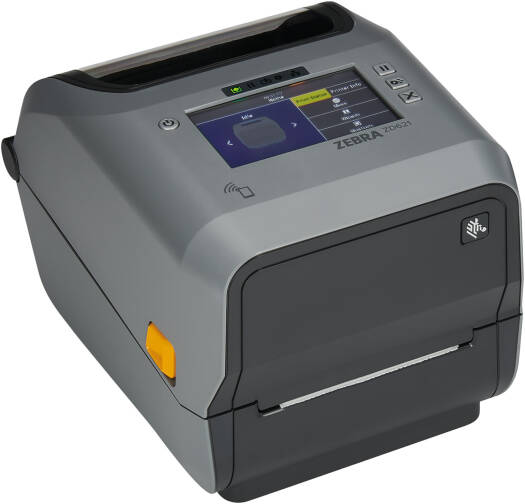
Zebra offers the ZD621R printer in an RFID configuration, alongside direct thermal, thermal transfer, and healthcare versions, and Pointus lists the RFID model among its Zebra printers. If you’ll be producing tags in-house, factor the printer and the label stock into your plan alongside the tags themselves.
A Practical Process for Choosing
Step 1: Describe the Asset
Write down what you’re tagging, what it’s made of, how it’s handled, and how long the tag must last.
Step 2: Set the Read Requirement
Decide whether you need single-item taps, doorway reads, or bulk reads across a pallet or shelf.
Step 3: Shortlist Frequency and Tag Type
Use the frequency and industry tables above to shortlist two or three candidates, including a surface-specific option for metal or liquid.
Step 4: Pilot on Real Items
Test shortlisted tags on actual assets in the actual environment, at the real reader positions. Lab specs and real-world results often differ, so this step prevents the expensive surprise.
Step 5: Confirm Compatibility and Compliance
Check the tags work with your chosen readers and software, meet the relevant standard, and comply with local radio regulations before ordering in volume.
Common Mistakes When Choosing RFID Tags
Using a Standard Tag on Metal or Liquid
This is the most common failure. Pick a tag designed for the surface rather than expecting a standard label to cope.
Choosing by Price per Tag
A cheaper tag that fails in the field costs more once you count re-tagging labour and missed reads. Judge by cost per successful read over the asset’s life.
Chasing Maximum Range
Longer range usually means a bigger or pricier tag and can cause unwanted reads from nearby items. Choose the range the job needs, not the biggest number on a spec sheet.
Skipping the Pilot
Read rates, interference, and tag durability vary by site. A short pilot catches placement and tag problems while they’re still cheap to fix.
Ignoring the Software Side
Tags only produce read events. Without software that turns those reads into asset records and actions, the hardware doesn’t deliver usable data.
Choosing an RFID Partner in Kuwait
Good RFID results come from matching tags, readers, printers, and software to your real environment, not from buying components in isolation.
Pointus Auto ID Solutions provides Automatic Identification and Data Capture (AIDC) technologies, including barcode systems, RFID tracking, and smart labeling, aimed at real-time data visibility. It is an authorized partner for brands relevant to RFID, including Zebra, HID Global, and Impinj, with more than 10 years of experience across 9 industries.
Pointus is based at Zainah Tower, Office B-15, Tunisia Street (Opp. Xcite), Hawally, Kuwait.
Ready to shortlist RFID tags for your industry? Reach out with your assets and environment and we’ll match tags, readers, and software.
A Simple Checklist Before You Order Tags
Before ordering RFID tags in volume, confirm these points:
- What are you tagging, and what material is it made of?
- Will tags sit on metal, near liquid, or in heat, cold, or washing conditions?
- Do you need passive, active, or semi-passive tags?
- Which frequency band matches your read range and reader plan?
- Which form factor survives how the item is handled?
- Do the tags meet the relevant standard and local radio regulations?
- How will tags be printed or encoded with your data?
- Have you piloted the shortlist on real items in the real environment?
Answering these before buying prevents the two expensive outcomes: tags that can’t be read where they’re attached, and tags that cost far more than the job required.
Conclusion
There’s no single best RFID tag, only the right tag for a particular asset, surface, environment, and read requirement. Frequency, passive versus active, surface behaviour, form factor, range, and standards all feed into that choice.
Start from the asset and its environment, shortlist using the frequency and industry guidance, and then prove the choice with a pilot on real items. That sequence avoids most of the failures that give RFID a bad reputation.
For businesses in Kuwait planning an RFID rollout, Pointus Auto ID Solutions supplies AIDC and RFID solutions backed by partnerships with Zebra, HID Global, and Impinj, matched to your actual assets and sites.
Ready to Choose the Right RFID Tags?
Talk to Pointus Auto ID Solutions about RFID tags, readers, and software for your industry.
Choosing RFID Tags, Answered
By power source: passive tags (no battery, powered by the reader), active tags (battery-powered, longer range), and semi-passive tags (battery for onboard features such as sensors). By frequency: LF, HF/NFC, and UHF.
Passive UHF is the usual choice for warehouse and supply chain tracking, because it offers the longest range and fast bulk reading at a manageable per-tag cost.
Standard UHF tags perform poorly directly on metal because metal reflects radio signals. Use tags designed for metal, such as on-metal UHF tags, or consider LF or HF where short range is acceptable.
Liquids absorb radio signals, which hurts UHF performance. LF and HF generally tolerate liquid better, and special liquid-rated tags and careful tag placement can help UHF in wet environments.
Passive tags have no battery and draw power from the reader, so they’re smaller, cheaper, and shorter range. Active tags have their own battery and broadcast over longer distances at higher cost.
It depends on frequency, tag size, reader power, and environment. As a rough guide, LF reads at very short range, HF up to around a metre, and UHF several metres, with active tags reaching further. Real-world range is best confirmed with a pilot.
EPC Gen 2 (ISO 18000-6C) is a widely adopted UHF RFID standard that helps tags and readers from different vendors work together.
Yes. Read rates, interference, and durability vary by site, so testing shortlisted tags on real items in the real environment catches problems while they’re inexpensive to fix.
Yes, with an RFID-enabled printer. For example, Zebra offers the ZD621R in an RFID configuration, which Pointus lists among its Zebra printers.
Pointus Auto ID Solutions provides AIDC technologies including barcode systems, RFID tracking, and smart labeling, and is an authorized partner for brands including Zebra, HID Global, and Impinj in Kuwait.