How Do You Get a Barcode (EAN/UPC) for Your Products in Kuwait?
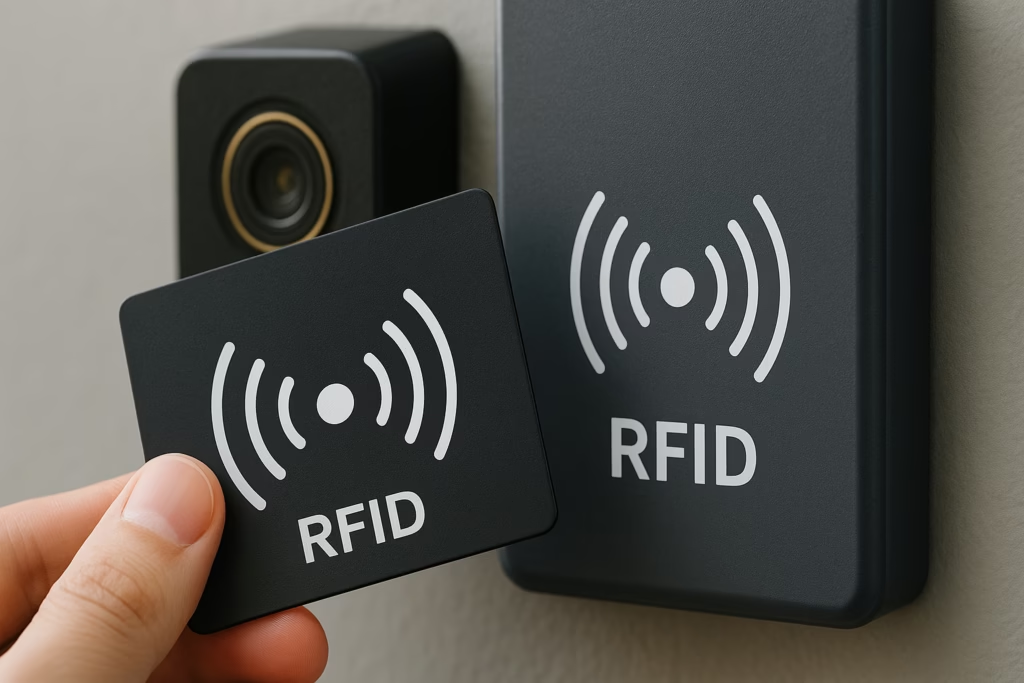
The barcode image is the easy part. The number inside it is what you can’t make up.
Plenty of software will draw you a barcode in seconds. But a retailer’s till doesn’t just read the stripes. It looks up the number, and that number has to be unique to your product anywhere in the world. That uniqueness is managed by one organisation, and in Kuwait the route to it is short once you know where to go.
This guide explains how to get an EAN or UPC barcode for your products in Kuwait, what the number means, and what to do after you have it.
Already have your product numbers and need labels printed? Tell us your label size and volume and we’ll match the printer, labels, and ribbon.
The Short Answer
To get a barcode number for a product you’ll sell through retailers, you join your local GS1 Member Organisation, which in Kuwait is GS1 Kuwait. They issue you a GS1 Company Prefix. You then assign a unique number (a GTIN) to each of your products, turn each number into a barcode symbol, and print it on your packaging.
GS1 states that GTINs are only available from GS1, and that only GS1 can guarantee a GTIN is unique and verifiable everywhere in the world.
A Barcode Is Two Things: A Number and a Picture
| Part | What It Is | Where It Comes From |
|---|---|---|
| The number (GTIN) | The unique product identifier, such as a 13-digit GTIN-13 | GS1, through your local Member Organisation (GS1 Kuwait) |
| The symbol (EAN-13 or UPC-A) | The row of bars that encodes the number so scanners can read it | Generated from your number using barcode software or a label printing system |
| The printed label | The symbol on your packaging or sticker | Your packaging printer, or a label printer |
Only the first part needs GS1. The second and third are a matter of software and printing.
What’s Inside an EAN-13 Number
An EAN-13 barcode encodes a 13-digit GTIN, built from three parts:
- GS1 Company Prefix: allocated to your company by GS1, and unique to you
- Item reference: the product number you assign yourself
- Check digit: a calculated digit that lets scanners catch misreads
The length of your company prefix determines how many item numbers you can create, so a longer prefix means fewer products. GS1 Kuwait can tell you how many numbers your prefix provides.
EAN-13 vs UPC-A
UPC-A is a 12-digit GTIN used in North America, and EAN-13 is the 13-digit international version. A 12-digit UPC can be written as a GTIN-13 by adding a leading zero, which is why most scanners handle both. If you sell in Kuwait and the wider region, EAN-13 is the usual format. If you export to North America, check what your buyers require.
What Does the 627 at the Start Mean?
GS1 prefix 627 is allocated to GS1 Kuwait. A GS1 prefix tells you which GS1 Member Organisation issued the company’s number. It does not tell you where the product was made. A company can register with one country’s GS1 and manufacture elsewhere, so don’t read 627 as a “made in Kuwait” mark.
Do You Actually Need a GS1 Barcode?
Not every barcode needs a GS1 number. It depends on who will scan the product.
| Situation | GS1 GTIN Needed? | Notes |
|---|---|---|
| Selling products through retailers or supermarkets | Yes | Retail tills expect standard EAN-13 or UPC-A numbers |
| Selling through online marketplaces that ask for a GTIN | Usually yes | Check each platform’s current product-identifier rules |
| Selling to a distributor or chain | Often yes | Ask the buyer what they require before printing |
| Tracking your own stock inside your business | Not necessarily | You can use your own codes, such as Code 128 asset or stock labels |
| Items sold only in your own shop | Not necessarily | GS1 also reserves number ranges for internal use within a company or region |
If a retailer or marketplace expects a global product number, use a real GS1 GTIN. If you only need to track items internally, a simpler code is fine and costs nothing.
How to Get Your Barcode, Step by Step
Confirm You Need Global Product Numbers
Check what your retailers, distributors, and marketplaces require. If they expect a GTIN, you need GS1. If not, an internal code may do.
Contact GS1 Kuwait
GS1 Kuwait is the local GS1 Member Organisation. Ask what membership options they offer, the cost, the documents they need from your company, and how long the process takes. These details are set by GS1 Kuwait and can change, so confirm them with the source.
Receive Your GS1 Company Prefix
This globally unique prefix is the foundation of every number you’ll create. Ask how many product numbers it supports.
Assign a GTIN to Each Product
Combine your prefix with an item reference you choose, then add the check digit. Keep a master list of every number and what it identifies, so you never reuse or confuse one.
Generate the Barcode Symbol
Turn each GTIN into an EAN-13 (or UPC-A) symbol using barcode software, your label design tool, or your packaging printer’s workflow.
Print It on Packaging or Labels
Print at a suitable size with good contrast and clear space around the symbol, on packaging or on labels applied to the product.
Test-Scan Before You Print in Bulk
Scan a printed sample with the same kind of scanners retailers use. A barcode that looks fine can still fail.
Share Your Product Data With Buyers
Give retailers and marketplaces the GTIN with the matching product description so the number resolves to the right item.
Printing your first batch of barcode labels? We can help you choose a printer and label stock that scan reliably.
Where to Apply: GS1 Kuwait
GS1 lists GS1 Kuwait as the local Member Organisation, with the following details on its Kuwait page. Please confirm they’re current before you get in touch.
- Website: gs1kuwait.org
- Phone: +965 2484 1778 or +965 6002 7002
- Email: customer.service@gs1kuwait.org
- Address: Shuwaikh Industrial 2, Block 2, Street 26, Plot 68, Alshayeh Complex (Mezzanine), Office 115, Safat, Kuwait
Questions worth asking when you contact them:
- What does membership cost, and is it a one-off or recurring fee?
- How many product numbers will my prefix provide?
- What documents do you need from my company?
- How long does approval take?
- Can I add more numbers later if my range grows?
Numbering Your Products Sensibly
Once you have a prefix, how you assign numbers matters. Keep a few habits:
- One number per distinct product. A different size, colour, flavour, or pack size is a different product and generally needs its own GTIN.
- Never reuse a number. Retire discontinued products’ numbers rather than recycling them for something new.
- Keep a master list. Record each number, the product it identifies, and when it was assigned.
- Leave room. Don’t use up your range on a loose numbering scheme. GS1’s GTIN allocation rules exist so numbers last.
If you’re unsure whether a variation needs its own number, ask GS1 Kuwait before you print.
Printing Barcodes That Scan
A valid number can still fail at the till if it’s printed badly. For EAN-13 and UPC-A:
- Size. Don’t shrink a symbol to squeeze it onto a package. Test the smallest version you plan to use.
- Contrast and clear space. Dark bars on a light background, with empty margins on both sides, read most reliably.
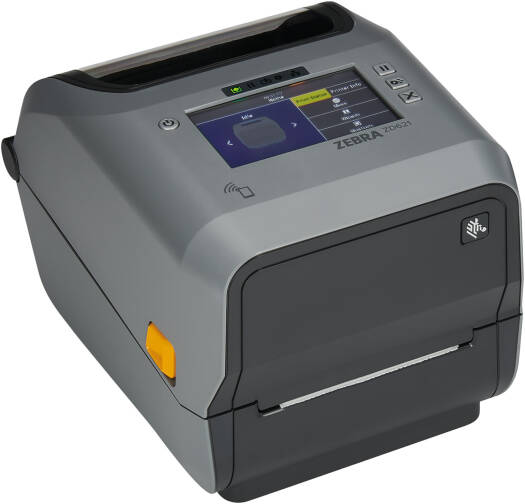
- Resolution. 203 dpi is standard for most label printing. Pointus lists the Zebra ZD220d at 203 dpi, and the ZD621R at up to 203 or 300 dpi depending on configuration.
- Method. Direct thermal suits short-lived labels. Thermal transfer suits labels that must last.
Pointus stocks thermal transfer labels with top-grade adhesive in common sizes, including 58mm×38mm, 75mm×50mm, 100mm×150mm, 38mm×25mm, 50mm×25mm, and 75mm×25mm rolls, alongside wax ribbons for thermal transfer printing.
What About Cheap Barcode Numbers From Resellers?
Some websites sell individual barcode numbers cheaply. GS1’s position is clear: GTINs are only available from GS1, and only GS1 guarantees a number is unique and verifiable everywhere in the world. A number bought elsewhere may not be traceable to your company, and retailers and marketplaces can decide not to accept it.
If a number is going on products you sell under your brand for years, getting it from GS1 Kuwait is the safer route.
Common Mistakes
Making Up Numbers That Look Real
An invented 13-digit number can clash with another company’s product or be rejected by a retailer’s system.
Reusing One Number for Several Variants
If two different products share a number, stock, pricing, and reporting get mixed up.
Printing Before Test-Scanning
A full print run with a barcode that won’t scan is an expensive reprint.
Reading 627 as “Made in Kuwait”
The prefix shows where the company registered, not where the product was made.
Skipping the Buyer’s Requirements
Some retailers have extra rules on format, size, or placement. Ask first.
Where Pointus Fits In
To be clear about roles: Pointus does not issue barcode numbers. That’s GS1 Kuwait. Pointus helps with what comes next: printing and reading the barcodes reliably.
Pointus Solutions is an authorized partner for Zebra, Honeywell, and Datalogic, supplying thermal label printers, labels and ribbons, and barcode scanning hardware, with more than 10 years of experience across 9 industries, including retail.
Pointus is based at Zainah Tower, Office B-15, Tunisia Street (Opp. Xcite), Hawally, Kuwait.
Ready to print and scan your product barcodes? Reach out with your label size and volume and we’ll recommend hardware.
A Simple Checklist
Before you order labels, confirm these points:
- Do your retailers or marketplaces require a GS1 GTIN?
- Have you contacted GS1 Kuwait about membership, cost, and documents?
- Do you know how many product numbers your prefix provides?
- Does every distinct product variant have its own number?
- Do you keep a master list of assigned numbers?
- Is the symbol printed at a readable size, with good contrast and clear space?
- Have you test-scanned a printed sample?
- Have you checked any extra requirements from your buyers?
Answering these first keeps you from paying twice, once for a number you can’t use and again for labels you have to reprint.
Conclusion
Getting a barcode for your products in Kuwait comes down to one decision and one organisation. If you’re selling through retailers or marketplaces that expect a global product number, you need a GS1 GTIN, and the route to it is GS1 Kuwait. If you only need to track your own stock, you can use your own codes and skip it.
The rest is craft: number your products carefully, turn the numbers into EAN-13 symbols, print them at a readable size, and test-scan before bulk printing.
For the printing and scanning side, Pointus Solutions supplies Zebra, Honeywell, and Datalogic hardware with matched labels and ribbons across Kuwait.
Ready to Print Barcodes That Scan First Time?
Talk to Pointus Solutions about label printers, labels, and scanners for your product barcodes.
Getting a Product Barcode in Kuwait, Answered
Join your local GS1 Member Organisation, GS1 Kuwait, to receive a GS1 Company Prefix. Then assign a unique GTIN to each product, generate the EAN-13 or UPC-A symbol, and print it on your packaging or labels.
GS1 Kuwait is the local GS1 Member Organisation. GS1 states that GTINs are only available from GS1, and that you must join a local Member Organisation to get one.
A Global Trade Item Number is the unique number that identifies a product. It combines a GS1 Company Prefix, an item reference you assign, and a check digit, and it’s what an EAN-13 or UPC-A barcode encodes.
UPC-A is a 12-digit barcode used mainly in North America. EAN-13 is the 13-digit international version. A UPC-A number can be written as a GTIN-13 by adding a leading zero.
627 is the GS1 prefix allocated to GS1 Kuwait. It shows which GS1 Member Organisation issued the company’s number, not where the product was manufactured.
Not necessarily. For internal tracking you can use your own codes, such as Code 128 labels. A GS1 GTIN matters when products are sold through retailers or marketplaces that expect a global product number.
Generally yes. A different size, colour, flavour, or pack size is a different product and normally needs its own GTIN. If you’re unsure, ask GS1 Kuwait before printing.
GS1 says only GS1 can guarantee a GTIN is unique and verifiable worldwide. A number from elsewhere may not be traceable to your company and could be rejected by retailers or marketplaces, so getting it from GS1 is the safer choice.
No. Barcode numbers come from GS1 Kuwait. Pointus supplies the label printers, labels, ribbons, and scanners to print and read your barcodes reliably.
Pointus Solutions is an authorized partner for Zebra, Honeywell, and Datalogic, supplying thermal label printers, labels, ribbons, and barcode scanning hardware across Kuwait.